


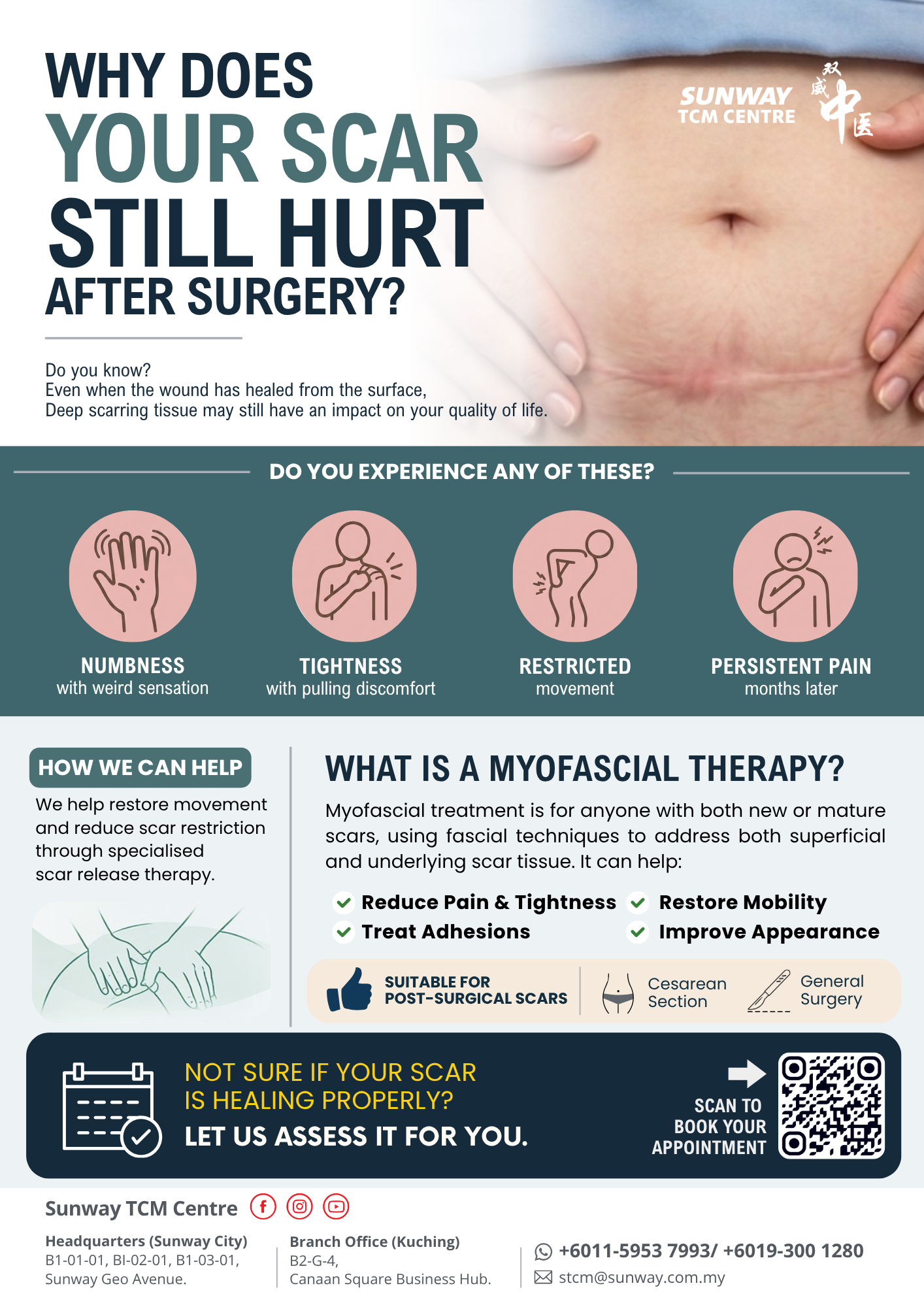
Why Does Your Scar Still Hurt?
Healing isn't just skin deep. Even when a wound has healed on the surface, deep scarring tissue (fascia) can become stiff and form adhesions. This often manifests as:
- Numbness with weird sensations.
- Tightness with pulling discomfort.
- Restricted movement near the scar.
- Persistent pain months after surgery.
How Scar Myofascial Therapy Helps
This specialized treatment addresses both superficial and underlying scar tissue using fascial techniques and Traditional Chinese Medicine (TCM). Our approach includes:
- Manual Therapy & Manipulation: Gently releasing restrictions around the scar.
- Acupuncture & Cupping: Improving local circulation and easing tension.
- Customized Care: Tailored plans that may also include moxibustion to enhance tissue flexibility.
Most patients notice significant improvements, such as softer tissue and greater mobility, within 3–5 sessions.
Frequently Asked Questions (FAQ)
Who can benefit from this treatment?
It is ideal for individuals experiencing pain or restricted movement from surgical scars, including Cesarean sections (C-section), mastectomies, and hysterectomies. It is also beneficial for those with sensitivity concerns or repeated surgeries in the same area.
What should I expect during the session?
Our practitioners will first assess your scar’s mobility. Treatment is customized and may include manual scar release, acupuncture, cupping, or moxibustion. While some feel mild soreness, many find the session relaxing.
How many sessions are needed?
Noticeable changes are often seen after 3–5 sessions. Results vary based on the scar's age and severity, but regular sessions combined with home exercises help achieve long-lasting results.
Will the scar tighten back?
With consistent follow-up care and proper scar management, improvements can be maintained, significantly reducing the risk of recurrence.