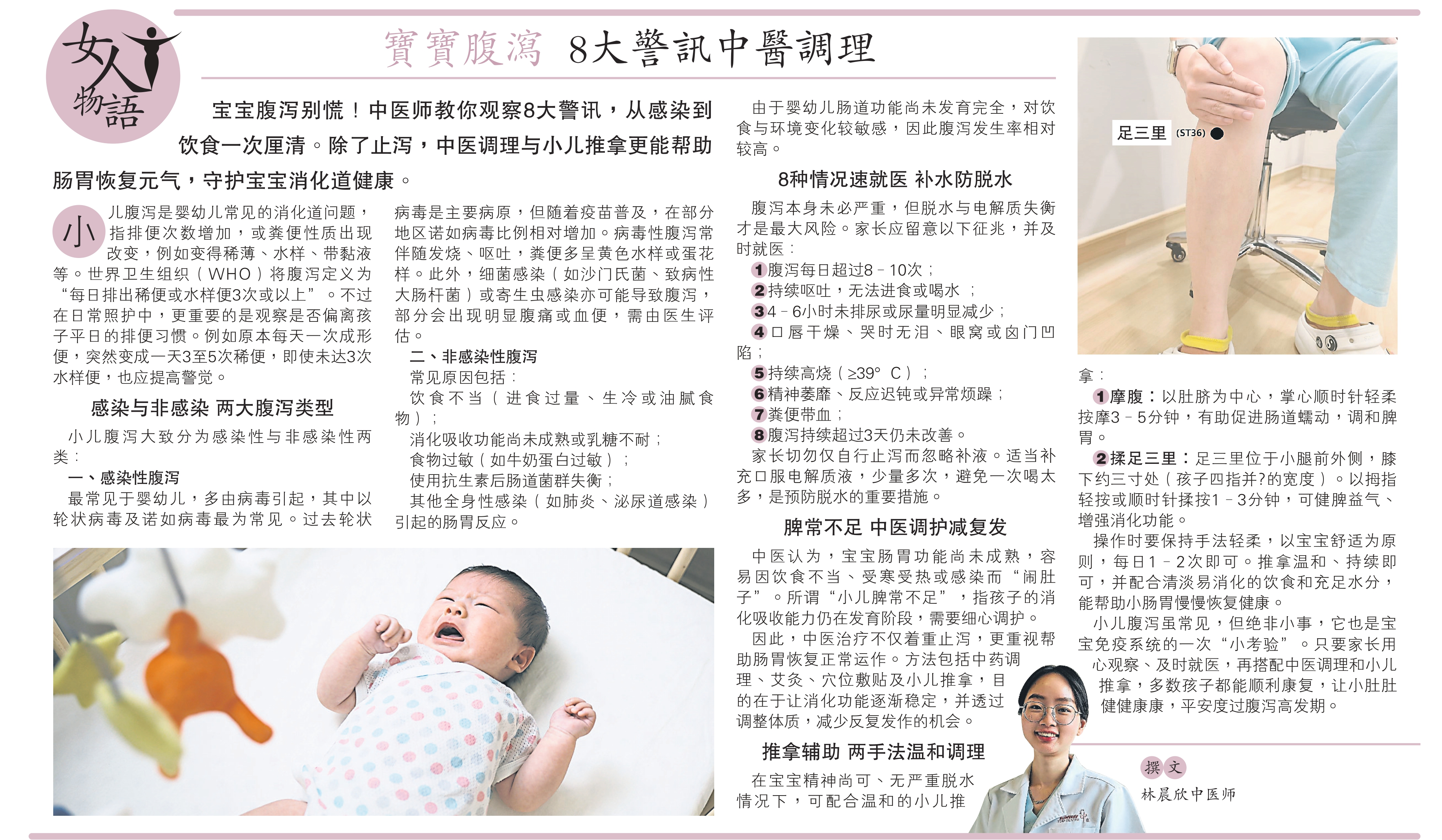


Baby Diarrhea — 8 Warning Signs and TCM Care
01/04/2026
Guang Ming Liang Yi: Women's Health
Baby Diarrhea — 8 Warning Signs and TCM Care
Don't panic if your baby has diarrhea! A TCM practitioner teaches you how to monitor 8 critical warning signs, helping you clarify everything from infections to dietary causes.
Beyond simply stopping diarrhea, TCM regulation and pediatric massage (Tuina) can effectively help the gastrointestinal tract regain its vitality, safeguarding your baby's digestive health.
Because the intestinal functions of infants and young children are not yet fully developed, they are highly sensitive to dietary and environmental changes, making the incidence of diarrhea relatively high.
Restoring Digestive Vitality to Safeguard Your Baby's Gut Health
Pediatric diarrhea is a frequent digestive issue in infants and toddlers. It refers to an increase in the frequency of bowel movements or a change in the consistency of the stool, such as becoming thin, watery, or loose with mucus.
The World Health Organization (WHO) defines diarrhea as "the passage of 3 or more loose or watery stools per day." However, in daily care, it is more important to observe whether the bowel habits deviate from the child’s usual pattern.
For instance, if a child who normally has one formed stool a day suddenly passes loose stool 3 to 5 times a day, parents should remain highly alert, even if the stool has not yet reached a completely watery consistency.
Two Major Types of Diarrhea: Infective vs. Non-Infective
Pediatric diarrhea is generally classified into two main categories:
- Infective Diarrhea
- This is most common in infants and toddlers and is primarily caused by viruses, with rotavirus and norovirus being the most frequent culprits. While rotavirus used to be the leading pathogen, the proportion of norovirus cases has relatively increased in some regions due to widespread vaccination.
- Viral diarrhea is often accompanied by fever and vomiting, with stools appearing yellow and watery or resembling scrambled eggs. In addition, bacterial infections (such as Salmonella and pathogenic E. coli) or parasitic infections can also cause diarrhea. Some of these cases may manifest with noticeable abdominal pain or bloody stools, requiring professional medical evaluation.
- Non-Infective Diarrhea
- Common causes include:
- Improper diet (overeating, consuming cold, raw, or greasy foods);
- Immature digestive and absorptive functions, or lactose intolerance;
- Food allergies (such as cow's milk protein allergy);
- Gut microbiota imbalance following antibiotic use;
- Gastrointestinal reactions triggered by other systemic infections (such as pneumonia or urinary tract infections).
8 Warning Signs to Seek Immediate Medical Care: Hydrate to Prevent Dehydration
Diarrhea itself may not always be severe, but dehydration and electrolyte imbalances present the greatest risks. Parents should watch closely for the following signs and seek immediate medical attention if they occur:
- Diarrhea occurring more than 8–10 times a day;
- Persistent vomiting, leaving the child unable to eat or keep fluids down;
- No urination for 4–6 hours, or a significant decrease in urine volume;
- Dry lips, crying without tears, sunken eyes, or a sunken fontanelle (soft spot on the head);
- Persistent high fever (>39 C);
- Lethargy, sluggish responsiveness, or extreme irritability;
- Bloody stools;
- Diarrhea lasting for more than 3 days without improvement.
Parents must not focus solely on stopping the diarrhea while ignoring fluid replacement. Administering an oral rehydration solution (ORS) in small, frequent sips—rather than letting the child drink too much at once—is a crucial step in preventing severe dehydration.
Innate Spleen Deficiency: TCM Care Reductions Recurrence
From the perspective of TCM, a baby's gastrointestinal function is still immature, making them highly susceptible to "stomach upsets" due to improper feeding, exposure to cold or heat, or infections.
The TCM concept that "a child's spleen is constantly deficient" means that a child’s digestive and absorptive capacities are still developing and require delicate care.
Consequently, TCM treatments do not just focus on stopping the diarrhea; they prioritize helping the digestive system return to its normal operations.
Methods include herbal medicine, moxibustion, acupoint plaster therapy, and pediatric massage (Tuina). The goal is to gradually stabilize digestive functions and adjust the child's underlying constitution to minimize the chances of recurrence.
Auxiliary Tuina: Two Gentle Massage Techniques
If the baby's energy levels are acceptable and there is no severe dehydration, gentle pediatric massage can be used as a supportive therapy:
- Abdominal Rubbing (摩腹 - Mo Fu): Centering on the belly button, use your palm to gently massage the abdomen in a clockwise direction for 3–5 minutes. This helps promote intestinal peristalsis and harmonizes the spleen and stomach.
- Kneading Zusanli (揉足三里): The Zusanli acupoint (ST36) is located on the anterior lateral side of the lower leg, roughly three inches below the knee (equivalent to the width of the child's four fingers pressed together). Gently press or knead the point clockwise with your thumb for 1–3 minutes to strengthen the spleen, boost Qi, and enhance digestive capacity.
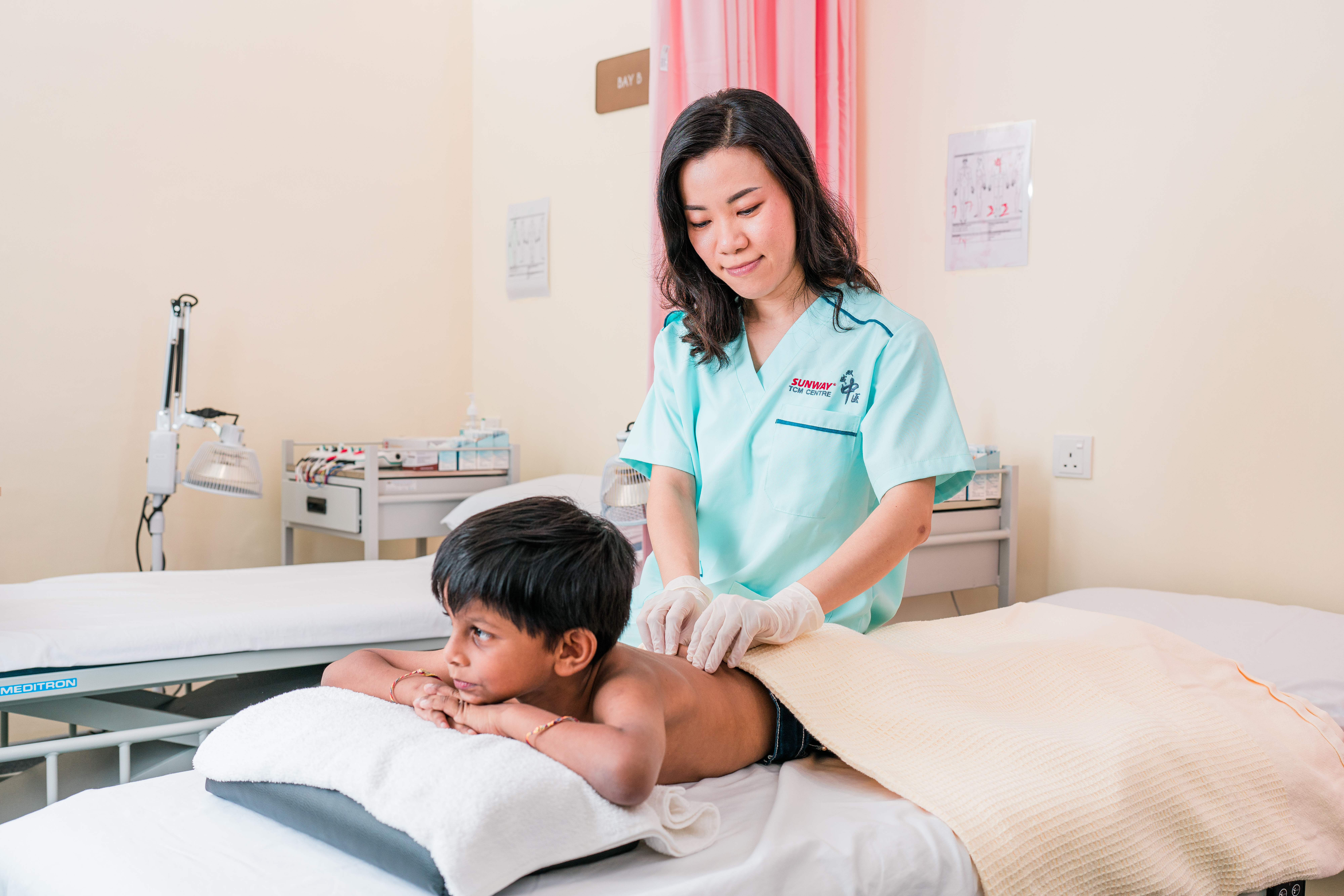
During operation, ensure the technique remains incredibly soft and comfortable for the baby, practicing it 1–2 times daily. Consistency and gentleness are key. Paired with a light, easily digestible diet and adequate hydration, this will guide your little one's stomach back to full health.
While childhood diarrhea is common, it is never a trivial matter—it is also a "minor test" for the baby's developing immune system. As long as parents observe carefully, seek medical care promptly, and complement it with TCM therapies and pediatric massage, most children will recover smoothly, keeping their little bellies healthy and safely navigating high-incidence seasons.
(Article by TCM Practitioner, Ms. Lim Chen Sing)