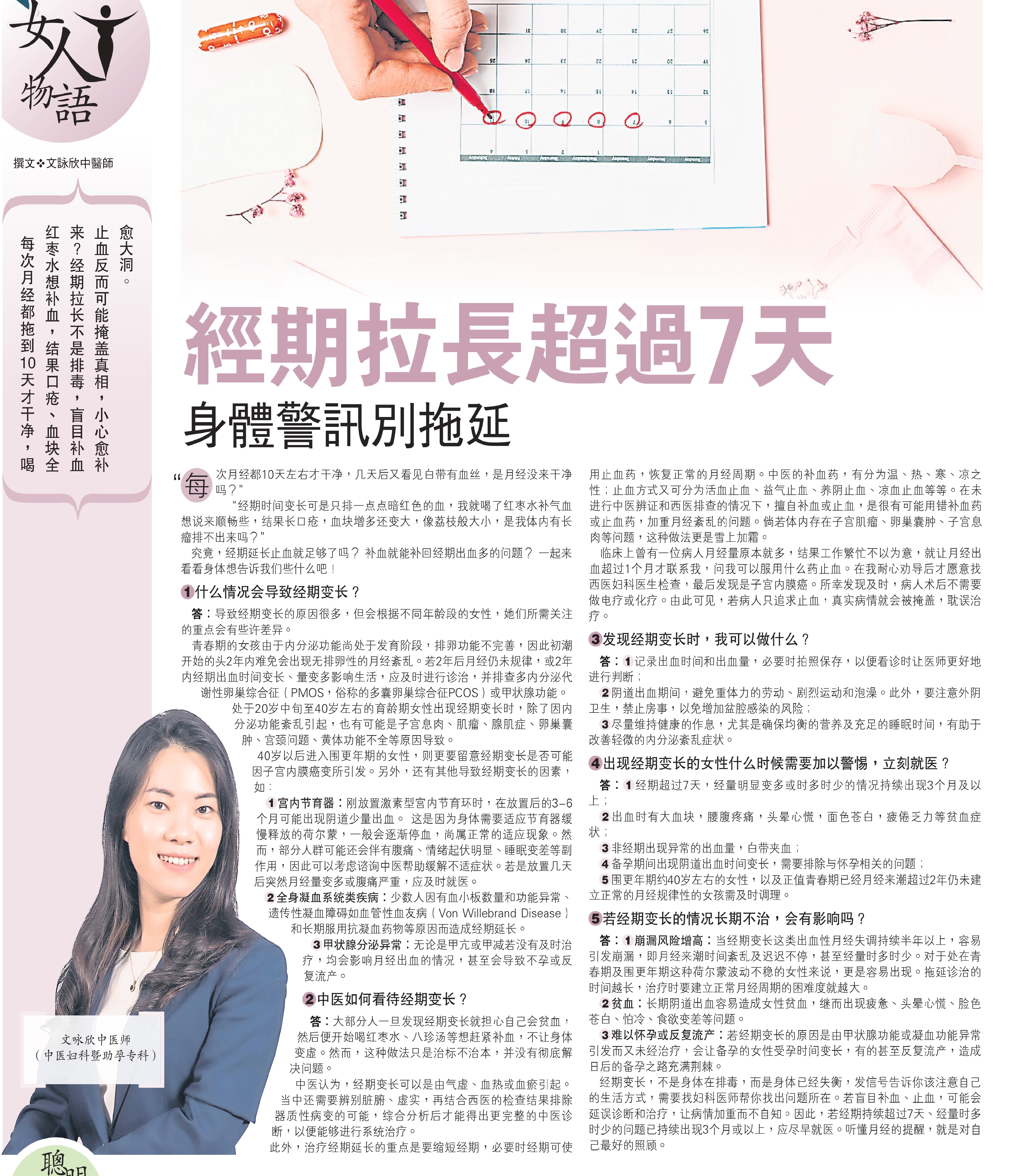


Prolonged Period Remedies
01/08/2026
Periods Lasting Longer Than 7 Days: Don't Ignore Your Body's Warning Signs
Guang Ming Liang Yi: Women's Health
"Every month, my period drags on for about 10 days before it finally stops. A few days later,
I see white discharge with faint traces of blood, and the bleeding never seems completely clean."
"Can a prolonged period just mean a bit of dull red spotting? I thought drinking red date water would nourish my Qi and blood, but instead I broke out in mouth ulcers, and the blood spots got even bigger! It feels like big clots won't come out, but neither will the spotting—is my body hiding a big problem?"

文咏欣中医师
Ms Mun Weng Yan
TCM Lead Practitioner (Gynaecology)
Is a prolonged period really just a matter of bleeding a few days extra?
Let's take a look at what your body is trying to tell you!
1. What Causes a Prolonged Period?
There are many reasons for prolonged menstruation, but key considerations differ across different age groups:
- Adolescent Girls: Because the hypothalamic-pituitary-ovarian axis is still maturing, endocrine function is not yet fully developed. When first establishing a regular cycle in the first 2 years, anovulatory menstrual disorders are common. However, if bleeding lasts too long or becomes excessively heavy, medical evaluation is needed to rule out endocrine or metabolic conditions.
- Women in Their 20s to 40s: When women in their reproductive years experience prolonged periods, in addition to endocrine fluctuations, it may be caused by structural or medical issues such as uterine polyps, fibroids, adenomyosis, cervical conditions, or thyroid dysfunction.
- Perimenopausal Women (Around Age 40 and Above): Women entering perimenopause should pay extra attention to whether prolonged periods could be triggered by precancerous cervical lesions or endometrial changes.
Other Medical Causes Across All Ages:
- Intrauterine Devices (IUD): Spotting or prolonged low-volume bleeding is common within the first 3 to 6 months after placing a copper or hormonal IUD as the body adapts. Some may also experience cramping or mood swings. If severe bleeding or pain persists, prompt medical review is advised.
- Coagulation / Hematological Disorders: A minority of patients may have platelet function abnormalities or inherited bleeding disorders (e.g., Von Willebrand Disease) that cause extended bleeding.
- Thyroid Dysfunction: Both hypothyroidism and hyperthyroidism can interfere with normal menstrual bleeding, potentially leading to heavy periods, irregular spotting, or even subfertility/recurrent miscarriages.
2. How Does TCM View Prolonged Menstruation?
Many people start drinking red date tea or taking herbal tonic soups as soon as they notice light, prolonged bleeding, hoping to stop the leak. However, treating symptomatically without addressing the root cause fails to fix the core problem.
In TCM, prolonged periods are typically linked to Qi Deficiency, Blood Heat, or Blood Stasis. Treatment requires evaluating the overall constitution rather than simply stopping the blood flow. TCM blood-stanching therapies vary—ranging from warm, cold, to astringent or stasis-resolving methods. Using blood tonics or hemostatic herbs without proper pattern diagnosis can make the condition worse, especially if there are hidden polyps, fibroids, or structural lesions.

Clinical Example:
A female patient experienced prolonged periods for over a month due to busy work schedules. Assuming it was minor, she delayed seeking care and took various blood-nourishing supplements on her own. When she finally visited a gynecologist, an examination revealed endometrial ulcers. Fortunately, early detection allowed successful treatment without needing major surgical procedures or chemotherapy. Self-medicating to stop bleeding can mask true conditions and delay vital medical care.
3. What Should You Do When Your Period Is Prolonged?
Track and Record:
Log bleeding days and flow volume accurately.
Take photos of abnormal discharge or blood clots if necessary to help your physician make a precise diagnosis.
Care During Bleeding Phases:
Avoid strenuous exercise, heavy physical labor, and hot baths/soaks.
Maintain good personal hygiene and refrain from sexual activity to reduce infection risks.
Maintain Healthy Habits:
Ensure balanced nutrition and adequate sleep, which helps regulate the body's internal endocrine environment.
4. When Should You Seek Immediate Medical Attention?
Seek prompt medical care if you observe any of the following:
- Periods lasting longer than 7 days, or continuous spotting/heavy flow lasting for 3 months or more.
- Heavy bleeding accompanied by large blood clots, dizziness, fatigue, pale complexion, chest tightness, or shortness of breath.
- Sudden unexplained bleeding or abnormal white discharge mixed with blood.
- Women trying to conceive who experience prolonged bleeding phases.
- Adolescent girls whose periods remain irregular and prolonged more than 2 years after menarche.
5. What Are the Risks of Leaving Prolonged Periods Untreated?
Increased Anemia Risk:
Long-term menstrual loss lasting over six months can easily lead to iron-deficiency anemia, causing persistent dizziness, fatigue, heart palpitations, pale lips, poor appetite, and general weakness.
Higher Risk of Serious Gynecological Pathology:
Postponing care during perimenopause increases the risk of missing early signs of cervical or uterine lesions.
Impact on Fertility:
Conditions like thyroid dysfunction, blood coagulation issues, or structural lesions can delay conception or lead to recurrent miscarriages.
Final Advice:
A prolonged period is a message from your body that internal balance has been disrupted.
If your period consistently lasts longer than 7 days, or if you experience spotting for over 3 months, do not rely on self-prescribed remedies.
Early evaluation and proper medical diagnosis are the best ways to protect your long-term health.
(Article by TCM Lead Practitioner, Ms. Mun Weng Yan)